 HuntGrid
Guide · 6 min read
How to pick the right stand for the wind
Most stand hunters have more than one spot, and the hardest call is often which one to sit tonight. The wind should make that call for you. Here is a simple way to do it every time.
On this page
1. Know each stand’s good winds
A stand is only as good as the winds it works in. For each one, ask two questions: where will deer come from (bedding, a trail, a food source), and where will they go? The good winds are the ones that carry your scent away from both, often a crosswind across the trail you’re watching. Write them down for every stand once, while you’re thinking about the ground, not in the dark at the truck. Most stands work in a few winds; some work in only one.
Don’t forget the walk in. A stand with a perfect wind is still a bad pick if the only way to reach it sends your scent across the bedding area. Note the entry route that goes with each wind.
2. Read the forecast for the sit, not the day
“West wind today” isn’t enough. What matters is the wind during the hours you’ll sit: the hour before sunrise to mid-morning, or the last two hours of light. Fronts often swing the wind in the middle of the day, so a morning stand and an evening stand can need different picks. Check the speed too: in very light air scent pools and swirls, and in strong gusts it gets thrown around, so neither direction is reliable.
3. Account for thermals
In hilly ground, the air along the slopes moves with the sun. At first light it usually slides downhill; once the sun warms a slope it rises; in the evening it sinks again as slopes cool. A ridge stand at dawn can be safe in almost any light wind, and a bottom stand in the evening can be a scent funnel straight into the deer coming off the hill. When the forecast wind is light, let the thermals decide. Our guide on how to hunt the wind goes deeper.
4. Rank, then choose
Line up your stands for the sit: the ones whose good winds match the forecast first, crosswinds next, and the ones in the wrong wind last. Between two stands with the same fit, pick the one with fresher sign or the one you haven’t hunted lately. A stand you sit in the wrong wind teaches deer to avoid it.
5. Know when to stay home
If none of your stands fits the wind, the best choice can be to leave them all alone and scout, hang a stand for that wind, or sit somewhere you can afford to burn. Pressure costs more than one missed evening.
Let HuntGrid do the ranking
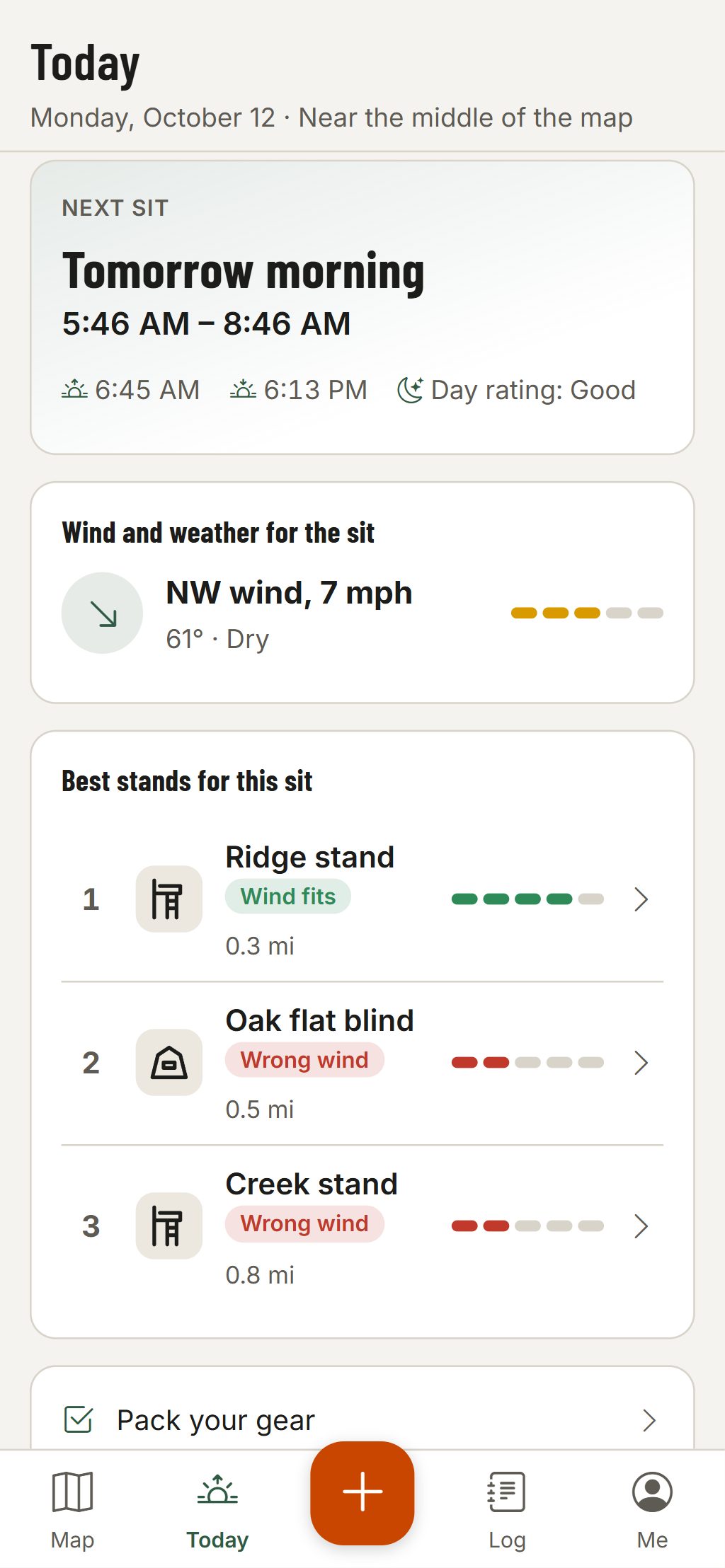
HuntGrid’s Today screen does steps 2 and 4 for you. Tick the good winds on each stand once, and Today takes the forecast for the next dawn or evening sit, gives it a 1 to 5 hunt score with its reasons, and ranks your stands by their score and how well the wind fits each one: good, so-so, wrong or not set. Tap a stand to open it on the map, then draw a scent cone from it and slide to the hour you’ll walk in. It all works from the last saved forecast when you have no signal.
A forecast covers a cell a few kilometres wide, so confirm the wind at the tree with a puff of powder. And check your local regulations for seasons and legal shooting hours before you go.
Questions
Still have a question? Read the help pages or email support@huntgrid.net.
What is the best wind for a deer stand?
One that carries your scent away from where deer come from and where they go, often a crosswind across the trail or funnel you’re watching. Each stand has its own good winds.
Should I hunt a stand with the wrong wind?
Usually not. Every time deer smell you at a stand, they learn to avoid it. Sit a stand that fits the wind, or leave them all alone and scout.
Does the wind change between morning and evening?
Often. Fronts and daytime heating can swing the wind, and thermals flip direction on slopes, so plan the morning and evening sits separately.
Is there an app that picks the best stand for the wind?
HuntGrid’s free Today screen ranks your stands for the next sit by the forecast hunt score and how well the wind fits the good winds you set for each one.
Your next hunt starts on the map
Create a free account, download your area and head out. No credit card, no per-state fees.
Already have an account? Sign in