 HuntGrid
Guide · 7 min read
Elk hunting gear list for the backcountry
A backcountry elk hunt means living out of your pack for days, often far from a road and from cell service, then carrying hundreds of pounds of meat out. Every item has to earn its weight. Here is what to bring and why.
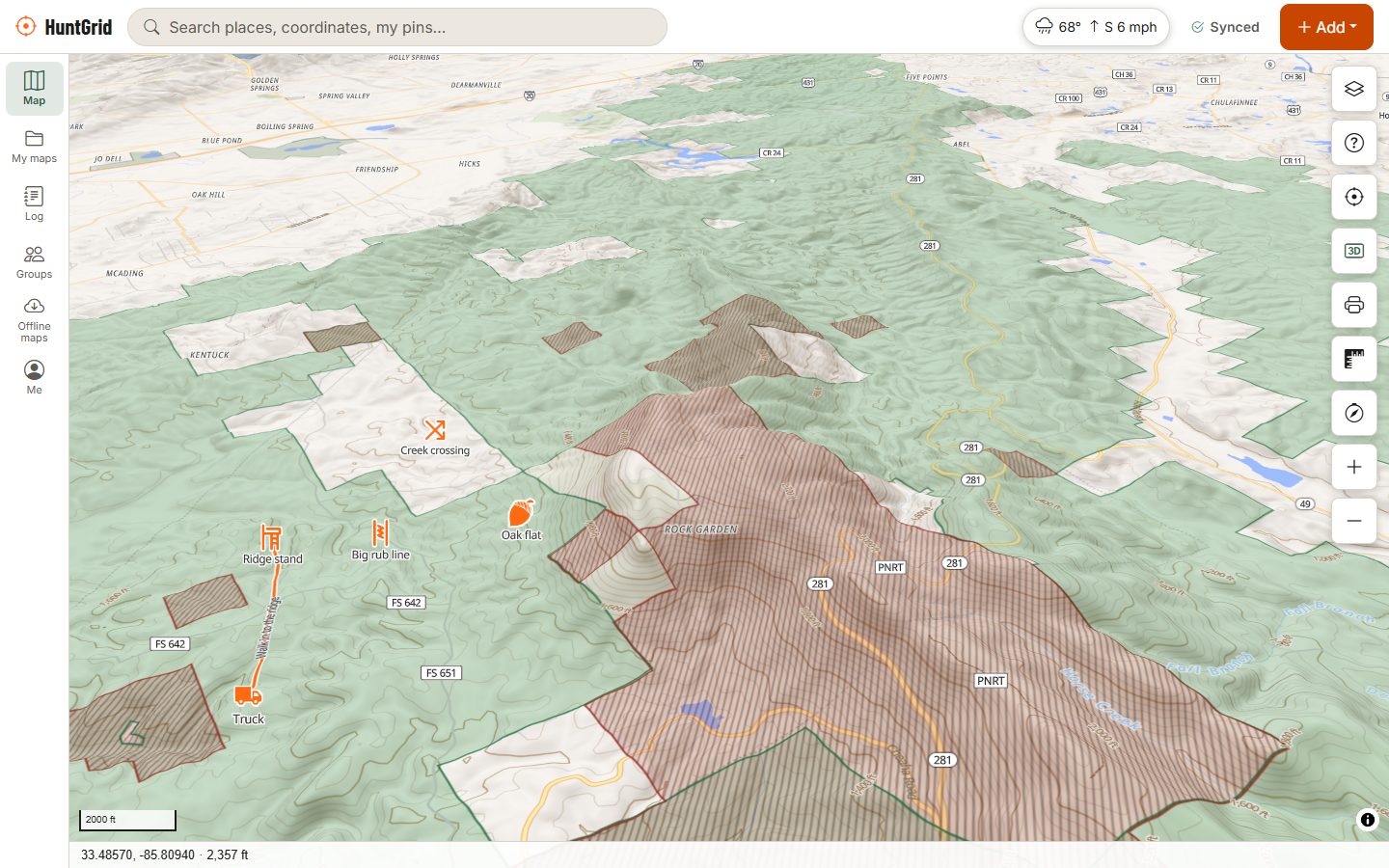
Map data © OpenStreetMap contributors, © OpenMapTiles; terrain: Copernicus WorldDEM-30 (credits)
On this page
Plan the trip before you pack
Gear follows the plan. Decide how far in you’ll camp, where water is, how you’ll get meat out and how long it will take to reach a cooler. Study the ground on a topo map in 3D: benches, saddles and north-facing timber near water often hold elk in the heat of the day. Confirm the land is open to you and which hunting unit you’re in, then download the whole area for offline use, because you likely won’t have a signal for days.
Shelter, sleep and camp
| Item | Why it matters |
|---|---|
| Backpack with a load-bearing frame | The same pack carries your camp in and quarters out. Fit it with weight in it before the season. |
| Tent or tarp | Mountain weather turns quickly. Practise pitching it fast, in the dark, in wind. |
| Sleeping bag and pad | Rated for the coldest night you might see, with a pad that insulates you from the ground. Sleep is what lets you hunt hard day after day. |
| Stove and fuel | Hot food and water keep morale and body heat up. Bring enough fuel for the days you plan plus one. |
| Water filter | Carrying all your water isn’t possible. Filter or treat every drop from streams and springs. |
| Trekking poles | They save your knees under a heavy load and steady you on steep sidehills and creek crossings. |
Safety and communication
| Item | Why it matters |
|---|---|
| Satellite messenger | Phones don’t reach most elk country. A satellite messenger lets you check in and call for help where there is no cell service. |
| Offline map and GPS | Download your area, mark camp and water, and record your track. Your phone’s GPS works with no signal. |
| Spare batteries or a power bank | Cold nights and constant GPS use drain batteries. Keep spares warm in your sleeping bag. |
| First-aid kit and fire starter | You are hours from help. Carry what you’d need to treat a cut, a sprain or blisters, and to make a fire if you’re stuck overnight. |
| Hunt plan | Leave your route, camp location and a back-by date with someone at home. |
Hunting gear
| Item | Why it matters |
|---|---|
| Bugle and cow calls | Bugles locate bulls and can pull them in during the rut; cow calls calm a nervous elk and stop a moving one. |
| Binoculars | Much of elk hunting is glassing open slopes at first and last light. Good optics find elk before you walk past them. |
| Rangefinder | Steep angles and wide basins make distances hard to judge. |
| Bow or rifle, licence and tags | Sighted in at the elevation and distances you’ll hunt, with the tag for the unit you’re in. Check your local regulations. |
| Wind checker | Elk live by their noses, and mountain thermals change through the day. Check the air often. |
Meat care: the part that decides the trip
A mature elk gives a lot of meat, and in warm early seasons it can spoil fast. Plan this part as carefully as the hunt.
| Item | Why it matters |
|---|---|
| Game bags | Breathable bags keep quarters clean and let them cool. Bring enough for the whole animal. |
| Knife and spare blades | Breaking down an elk dulls a blade. Spares or a sharpener save time. |
| Bone saw | Useful for quartering and for removing antlers, and where your jurisdiction requires evidence of sex to stay attached. |
| Paracord | Hang quarters in the shade to cool, off the ground and away from your camp. |
| Tag, pen and zip ties | Tag the animal as your regulations require, before you move it. |
Get meat cool and off the mountain quickly, hang it in shade where air moves, and keep it well away from where you sleep in bear country. Know your jurisdiction’s rules on tagging, evidence of sex and transporting meat before you go.
Pack it with HuntGrid
The Backcountry elk template in HuntGrid’s gear checklists starts with the safety essentials and adds the pack, shelter, sleeping bag, stove, water filter, satellite messenger, trekking poles, calls, game bags, bone saw and spare batteries. Tick it off at home, add your own items, and keep it on your phone with your offline maps.
Seasons, units, tags and transport rules are set by each state and province. Check your local regulations: they have the final word.
Questions
Still have a question? Read the help pages or email support@huntgrid.net.
What do I need for a backcountry elk hunt?
A load-bearing pack, shelter, a warm sleep system, a stove, a water filter, a satellite messenger, an offline map, first aid, calls, optics, and game bags, knives and paracord to care for the meat, plus your licence, tags and weapon.
How do I keep elk meat from spoiling?
Quarter the animal quickly, put the meat in breathable game bags, hang it in shade where air moves, and get it to a cooler as soon as you can. Warm early seasons leave the least time.
Do phones work in elk country?
Often not. Download your area for offline use before you leave so your GPS position and maps work, and carry a satellite messenger to communicate where there is no cell service.
Is there an elk hunting checklist app?
Yes. HuntGrid’s free gear checklists include a Backcountry elk template you can tick off, add to and keep on your phone with no signal.
Your next hunt starts on the map
Create a free account, download your area and head out. No credit card, no per-state fees.
Already have an account? Sign in