 HuntGrid
Wind and scent
Hunting wind and scent: know where your scent goes
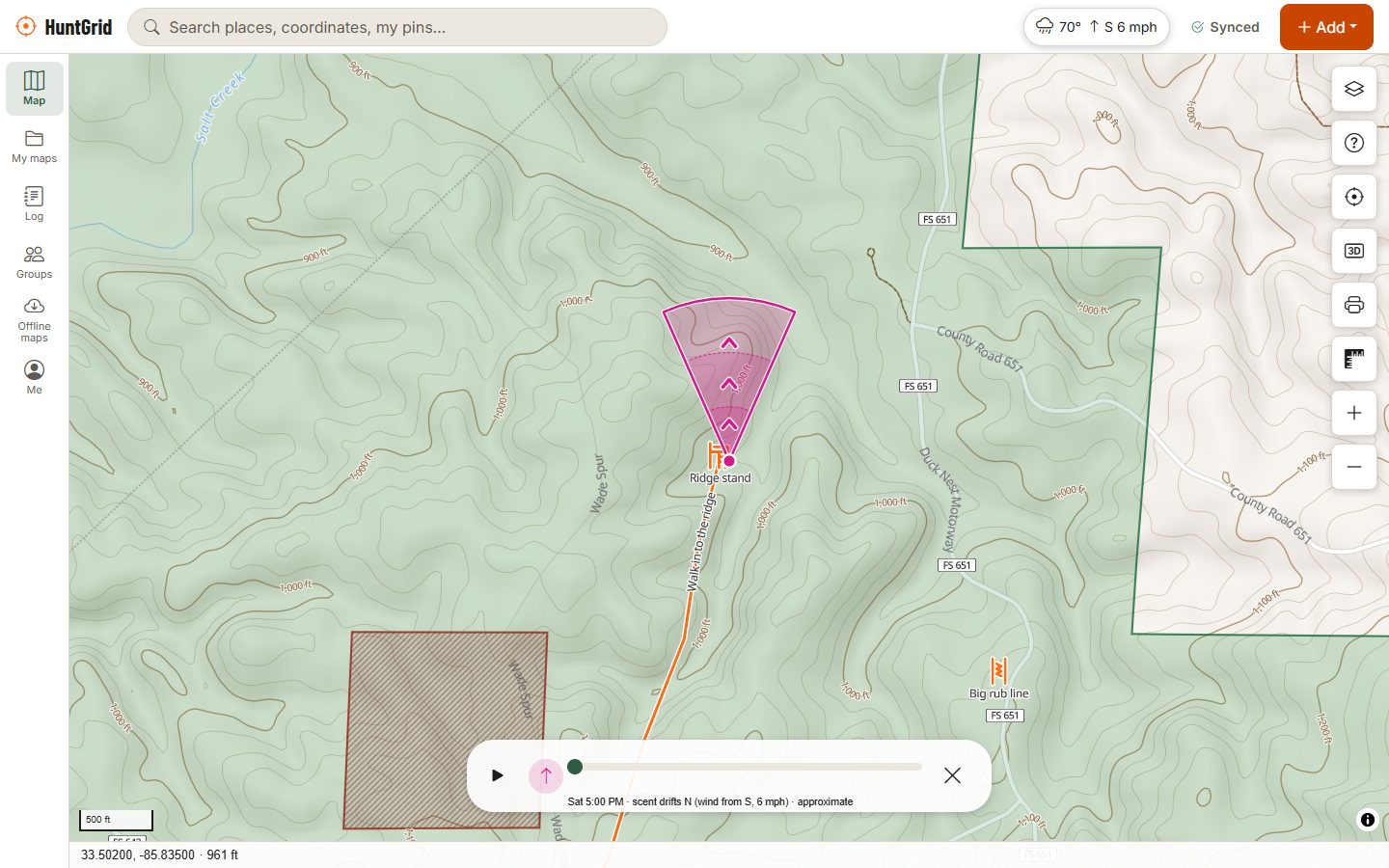
Pick a stand and see where your scent will drift, hour by hour, from the forecast. Add wind arrows across the map, a thermals hint for hilly ground and a daily hunt score that tells you which stand fits today’s wind.
Map data © OpenStreetMap contributors, © OpenMapTiles; terrain: Copernicus WorldDEM-30 (credits)
Wind tools built for stand hunters
Whitetails, elk and moose trust their noses first. These tools help you keep your scent out of the places they come from.
Scent cone
“Scent cone from here” on any stand or spot draws where your scent drifts, fading with distance, with a slider through the next 48 forecast hours. In calm air it shows a swirl and says confidence is low.
Good winds for each stand
Tick the wind directions that work for a stand on a compass. HuntGrid then tells you, hour by hour, whether the forecast suits it.
Daily hunt score
A 1 to 5 score for dawn, midday and evening today and tomorrow, with its reasons: wind fit, pressure trend, temperature change, rain or snow, and solunar periods near dawn and dusk. “How is this calculated?” shows the weights.
Thermals hint
From the slope and the way it faces, plus sunrise and sunset, HuntGrid says whether air is rising or falling at your stand and when it should switch. It’s guidance, not a measurement.
Wind across the map
Forecast wind arrows over the whole view with their own time slider, wind and gust forecast maps, and observed wind at nearby weather stations.
Wind-right alerts
Turn on alerts and HuntGrid tells you when the wind is right for one of your stands with a strong score, or when the pressure is about to drop.
How to use it
Hunt the wind in four steps
Mark your stands
Add each stand or blind as a waypoint and tick the winds that work for it.
Check the hunt forecast
The night before, open a stand to see tomorrow’s windows and the 48-hour stand advisor: good, marginal or bad, hour by hour.
Plan the walk in
Open the scent cone and slide to the hour you’ll walk in and the hours you’ll sit. Pick a route that keeps your scent off bedding areas and trails.
Confirm in the field
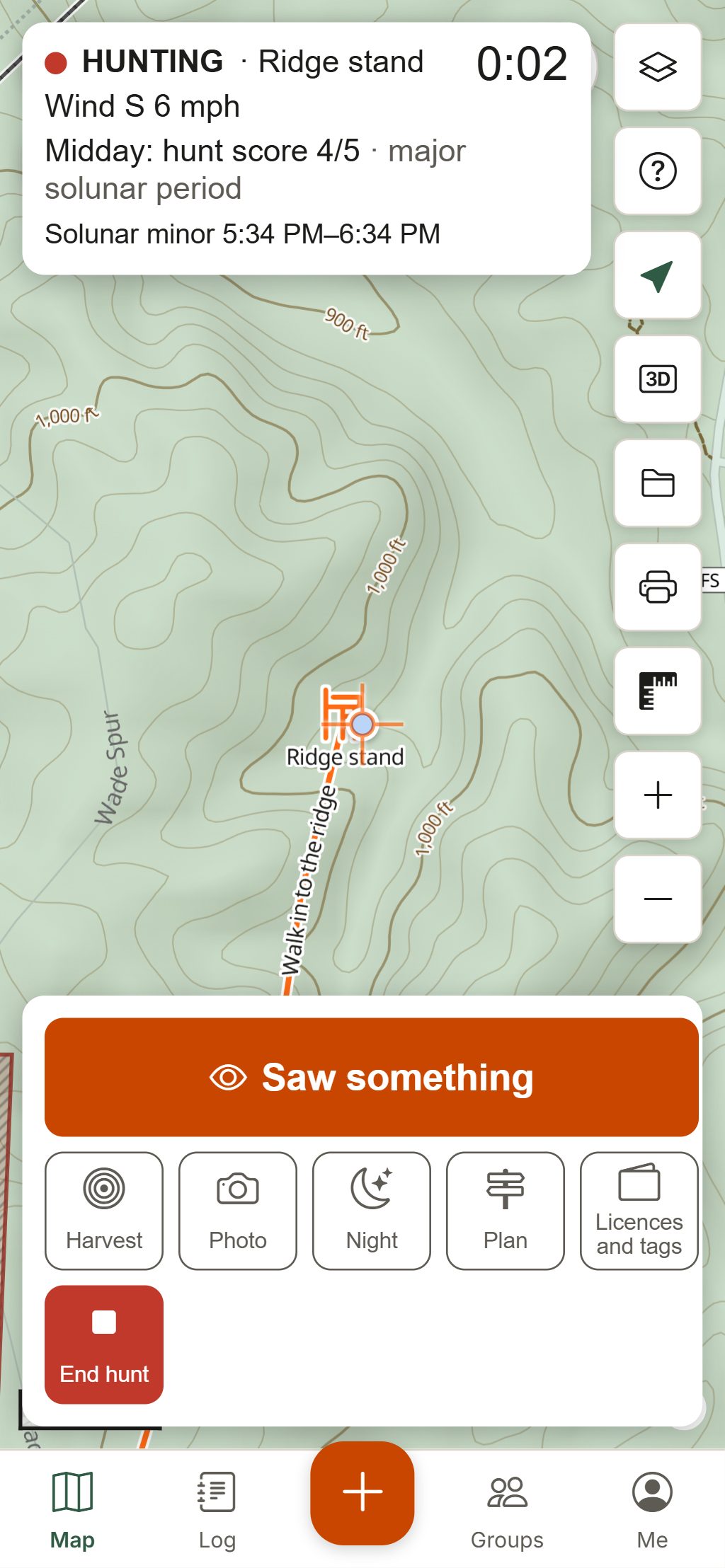
In Hunt Mode, the header shows the current wind and whether it suits your stand. Trust a puff of powder or milkweed at the tree over any forecast.
Map data © OpenStreetMap contributors, © OpenMapTiles; terrain: Copernicus WorldDEM-30 (credits)
Good to know
Reading wind on the map
- A “south wind” comes from the south. HuntGrid’s arrows point where the air goes, and the text says both: “scent drifts NE (wind from SW)”.
- The forecast is for a grid cell a few kilometres wide. Ridges, draws and timber bend the wind at your tree.
- In calm air, scent pools and swirls around you rather than travelling in one direction.
- Thermals often run downhill in the cool of early morning and evening, and uphill once the sun warms a slope.
- The hunt score and scent cone are worked out on your phone from the last saved forecast, so they still work with no signal.
Questions
Still have a question? Read the help pages or email support@huntgrid.net.
Is there a free hunting wind app?
Yes. HuntGrid’s scent cone, wind arrows, thermals hint, hunt score and wind alerts are all in the free plan, on your phone and your computer.
How does a scent cone work?
It takes the forecast wind at your spot for each hour and draws the area downwind where your scent is likely to travel: longer in steady wind, wider when gusts swing it, and a swirl around you in calm air. It’s an estimate from the forecast, so check the wind on the ground too.
What are thermals in hunting?
Thermals are air currents that move up or down a slope as it warms and cools. They often pull scent downhill in the cool hours and uphill once the sun is on a slope. HuntGrid estimates them from the slope, the way it faces and sun times.
What is the best wind for a deer stand?
One that carries your scent away from where deer will come from, usually their bedding areas, trails and food. Tick those good winds on each stand and HuntGrid rates each hour of the forecast against them.
Does the wind forecast work offline?
The scent cone and hunt score use the last forecast saved on your phone, and offline areas save the forecast across the area, refreshed whenever you’re back online. Live wind maps and stations need a connection.
Your next hunt starts on the map
Create a free account, download your area and head out. No credit card, no per-state fees.
Already have an account? Sign in